English to Machine
The scanner wants keywords. The hiring manager wants a person. Which one are you supposed to write for?

The scanner wants keywords. The hiring manager wants a person. Which one are you supposed to write for?
A hiring manager posted on LinkedIn recently that she could always tell when a CV had been written by ChatGPT, and that she rejected those candidates on sight. No interview. No conversation. Straight out. It was shared widely, with a great deal of back-slapping in the comments.
To be fair, she's right that they all sound the same. Anyone who has read a pile of CVs lately knows the type: smooth, confident and about nobody in particular. Where she goes wrong is what she thinks it tells her. The person behind that CV may well have sat up past midnight with it, because it was the only help available that was free, awake at that hour, and didn't make them feel stupid for asking. I helped someone close to me with hers last month, with ChatGPT open in the other window.
Further down the post, someone had gone and looked at the hiring manager's current vacancies. Every one read as if it had come out of the same machine. Same structure. Same verbs. Same request for a self-starter who thrives in a fast-paced environment.
She rejects any CV that sounds like ChatGPT. Her job adverts sound like ChatGPT. And several of the comments congratulating her on spotting it had the unmistakable rhythm of ChatGPT.
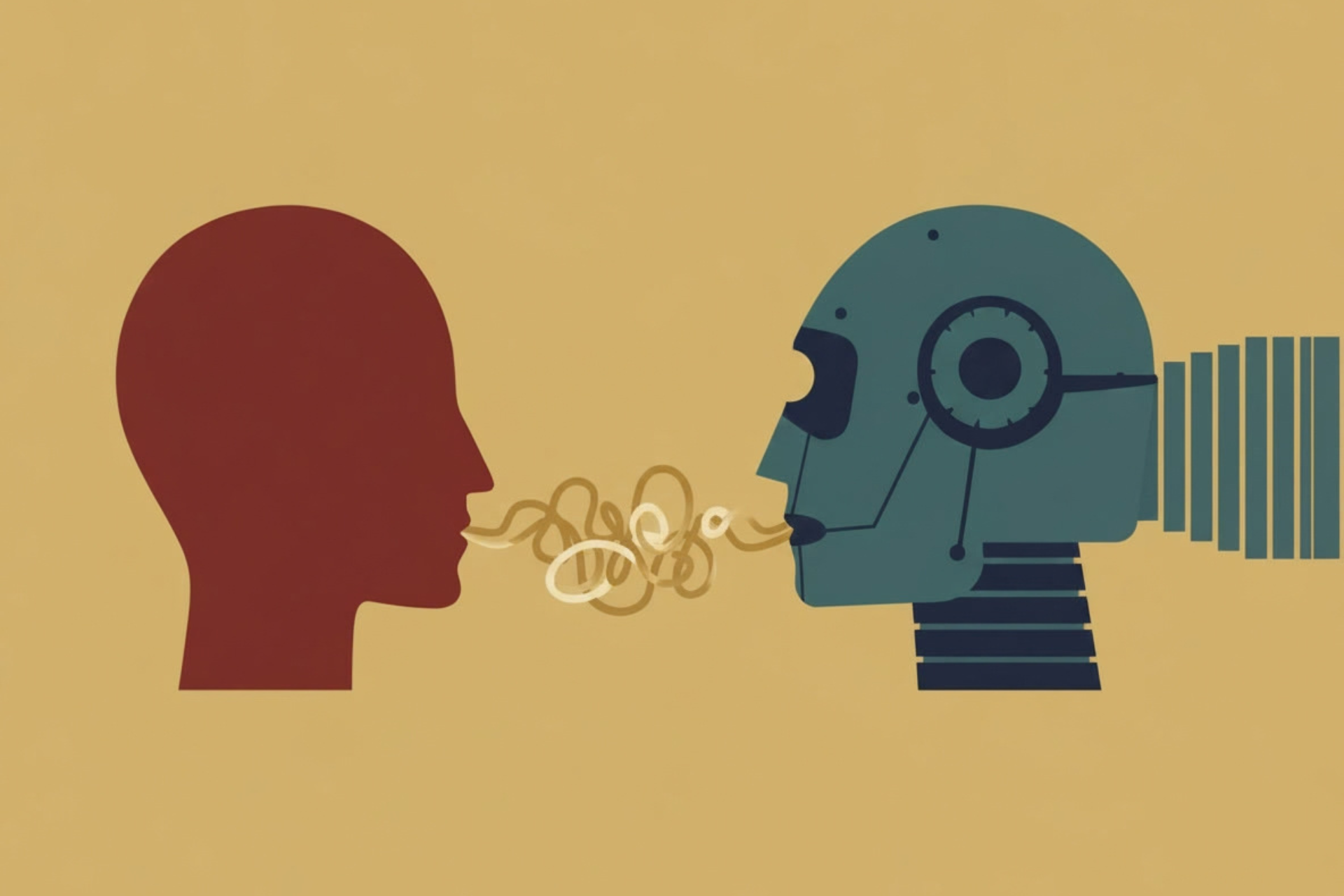
It's no wonder people are exhausted looking for work. You don't even know who's reading your CV any more, a human or a machine, and they want opposite things. The first is software. It reads the whole document in a fraction of a second and wants the exact phrases from the advert, repeated, in a layout it can actually read. No columns, no tables, nothing clever, nothing it might mistake for a smudge. The second reader is a person, who gives the same document a few seconds at most and wants to feel that somebody is behind it. Write for the first and the second thinks you're a robot. Write for the second and the first never lets them see it.
So who the fuck are we supposed to write for?
And that's before you've started worrying about your age, the gap in 2020, and the hundred other people who clicked apply before you'd finished reading the advert. Then there's the small industry that has worked out that anyone with an "Open to Work" banner is a till waiting to ring. Within a day of switching it on you're being offered a CV rewrite, a LinkedIn makeover and an audit of your social media, as though what you really needed this week was something else to worry about.
In plenty of companies, hiring now runs on software at almost every stage. The advert is drafted by it. The applications are sorted by it. The shortlist is assembled by it. The first interview, for a growing number of roles, is recorded into a laptop with nobody on the other end, to be assessed later by whoever or whatever gets round to it. A recruiter using AI is being efficient. A candidate using AI is being lazy. It is the same action.
The sameness is real, but it isn't new. The results-driven leader with a proven track record has been with us since the nineties, and they exist because candidates were told to build them. An entire industry of CV coaches, outplacement consultants and well-meaning friends has spent years teaching people to write for the scanner rather than the reader. Mirror the language of the advert. Lead with impact. Quantify everything. Now some people are using a tool to do exactly what they were coached to do, only faster.
The advice for older applicants is particularly instructive. Take the dates off. Cut anything before 2010. Lose the first job, and the second, and probably the one that taught you the most. Say "extensive experience" rather than "thirty years", because thirty years invites a scrutiny nobody gives a 35-year-old. Thirty years in work means somewhere in your fifties, and somewhere in your fifties means no thanks. Curriculum vitae is Latin for the course of a life. Nobody reading it cares about the course of your life. They care whether you followed the CV rules.
There's a deeper problem for anyone whose career began before the internet, which is that it doesn't keyword well. You were a branch manager before anyone said "stakeholder". You ran a team for a decade without once calling yourself a people leader. You fixed things, calmed things, kept things open through two recessions and a pandemic, and at no point did any of it come with a flashy job title. The software doesn't know what you did. It only knows what you called it, and what you called it was usually "just fucking get on with it."
So now you're a translator. Not English to Spanish. English to machine. You sit with the advert in one window and your CV in the other and work through it line by line, swapping your words for theirs. "Ran the shop" becomes "led end-to-end retail operations". "Sorted out the staff rota" becomes "optimised workforce planning". "Had a word in the car park" becomes "managed sensitive performance conversations". By the end it is accurate, technically, and none of it sounds like you, and you know it.
That process, laborious and faintly humiliating, is exactly what AI now does in thirty seconds. Which is why so many people use it, and why so many CVs have started to sound the same. People haven't stopped thinking. A machine is simply better at translation than a tired person at eleven at night, on their forty-second application, who already knows what's coming.
What a CV rarely shows, and what the process rarely asks for, is someone who has taken a messy working life and made it work anyway. Someone who can look at three decades of jobs, some brilliant, some forgettable, one or two that ended badly, and say plainly what they're good at and why. That is hard to fake and almost impossible to scan, so it mostly goes out the window.
Speaking plainly is the problem, of course, and it doesn't stop at the CV. Get as far as an interview and you still can't say you left because the boss was a knob. You can't say you were made redundant because the company didn't have a clue how to manage its cash flow, or that you walked because the owner's partner was an absolute liability. Instead you say you "left to pursue a new challenge". You were "affected by a restructure". You were "looking for a better cultural fit". Everyone on the other side of the table knows exactly what each phrase means, and everyone nods along and agrees to pretend they don't.
None of which helps much if you're the one writing a CV this weekend. There is no clever answer to the two-reader problem. You write for the scanner because otherwise nothing happens. You try to leave one or two sentences in that sound like a person, in the hope that a person gets that far. And when you're stuck, at the kitchen table, on the fortieth version of a personal statement that makes you wince every time you read it back, because it sounds like a complete twat wrote it, of course you open ChatGPT. Why wouldn't you? For a lot of people it's the only help they've got. No coach, no contacts, no one in the house who's hired anyone since 2009. Then you send it into the wilderness alongside hundreds of others, and mostly you hear nothing at all, which is somehow worse than a no. Or the rejection arrives before you've finished the coffee you were drinking when you pressed send.
A woman I know spent three weeks on one application last year. Not her only one, but the one that mattered, and she worked it properly. Drafted, redrafted, used a tool to challenge her own phrasing, threw out two versions and started again. It was rejected at the CV screening stage, inside a day. She found out later that the company was in a hiring freeze and had posted the role by mistake.
She did get another job eventually. Different company, shorter process. They'd written the job description themselves; you could tell from the typo and the missing full stop. She turned up five minutes late and the interviewer didn't give her the disappointed-parent look. He asked normal questions. He laughed when she said she was crap at socialising. Afterwards she asked what had stood out on her CV. He said HR had sent it through with a few others, and he hadn't really looked at it. He'd liked her answers to the questions on the application form. The bit she'd typed straight in, in about ten minutes, because it was the last thing standing between her and bed.
Work, money, culture and health, weekly. Free.